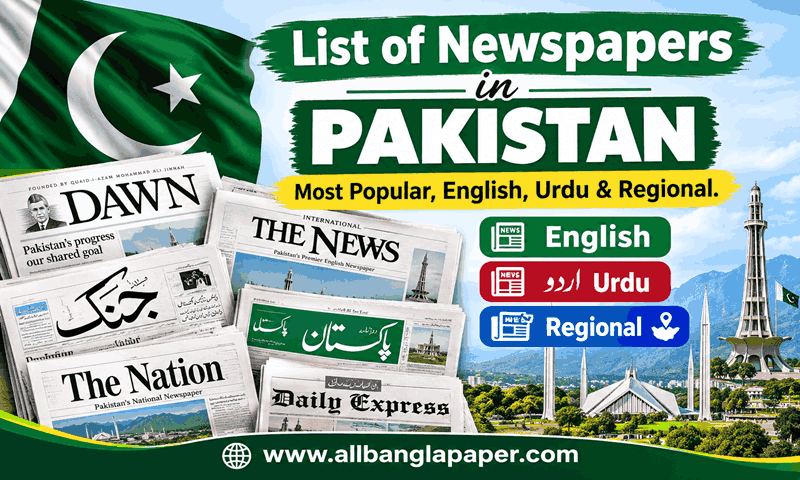
List of Newspapers in Pakistan | Most Popular, English, Urdu & Regional
Pakistan maintains a vibrant and diverse newspaper industry that reflects the country’s linguistic, political, and cultural complexity. With hundreds of daily, weekly, and periodical publications registered across the nation...
Pakistan maintains a vibrant and diverse newspaper industry that reflects the country’s linguistic, political, and cultural complexity. With hundreds of daily, weekly, and periodical publications registered across the nation, print media continues to play a significant role alongside television and digital platforms. According to older Pakistan Bureau of Statistics figures, the total number of newspapers stood at around 707 in 2019, while the All Pakistan Newspapers Society (APNS) represents hundreds of member publications. The Audit Bureau of Circulations (ABC) certifies circulation for advertising purposes, though detailed public audited figures for every title are not always readily available in real time.
Urdu-language newspapers dominate mass circulation and readership because Urdu serves as the national lingua franca and primary language of a large majority of readers. English newspapers, though lower in absolute numbers, punch far above their weight in influence among urban professionals, policymakers, business leaders, diplomats, and the educated elite. Regional-language papers in Sindhi, Pashto, Balochi, Saraiki, and other tongues serve provincial audiences and local issues. Major media groups such as the Jang Group, Dawn Media Group, Express Media Group (Lakson), Nawa-i-Waqt Group, and Dunya Media control many of the leading titles.
This comprehensive, SEO-friendly guide covers the most popular newspapers in Pakistan, detailed lists of leading English and Urdu dailies, key regional publications, historical background, ownership patterns, digital transformation, and the continuing relevance of print. It draws on industry reports, Wikipedia compilations, media directories, government advertising data, and content analyses to provide an accurate overview suitable for readers, researchers, advertisers, and students of Pakistani media.
Most Popular Newspapers in Pakistan
Circulation and readership data in Pakistan are often self-reported or based on ABC certification required for government advertising. Independent third-party audits are less frequent or less publicly detailed than in some other markets, so rankings rely on a combination of publisher claims, advertising spend patterns, historical data, and industry consensus.
Daily Jang (Urdu) is widely regarded as the largest-circulation newspaper in Pakistan. Published by the Jang Group from multiple cities including Karachi, Lahore, Rawalpindi/Islamabad, Multan, and others (with a London edition historically), it reaches a massive national audience. Estimates and claims place its daily circulation in the hundreds of thousands, frequently cited as the top Urdu daily. It offers comprehensive coverage of politics, crime, local news, sports, and entertainment in an accessible style.
Nawa-i-Waqt (Urdu), founded in 1940, is one of the oldest continuously published Urdu newspapers and maintains strong conservative editorial leanings and multi-city editions. It remains highly influential, especially in Punjab.
Daily Express (Urdu), from the Express Media Group, has grown into a major national player with simultaneous printing from several cities and a modern appeal that attracts younger and urban readers.
Other high-reach Urdu titles include Dunya, Khabrain, Daily Pakistan, and Ummat. On the English side, Dawn stands as the most prestigious and widely respected title, while The News International (also Jang Group) and The Express Tribune command significant urban readership.
Government advertising allocations provide another proxy for influence and reach. In recent periods, Urdu papers such as Jang, Express, Dunya, Ausaf, and Nawa-i-Waqt have received substantial shares of public-sector ad spends, followed by English titles including The Express Tribune, Dawn, and Business Recorder.
These leading papers shape public discourse on politics, economy, security, society, and international affairs. Many maintain strong digital platforms, e-papers, mobile apps, and social media presence that extend their influence beyond print copies.
English Newspapers in Pakistan
English-language newspapers in Pakistan target the urban middle and upper classes, professionals, academia, bureaucracy, and international audiences. They emphasize analytical reporting, investigative journalism, business coverage, and opinion pages. Although their absolute circulation is lower than major Urdu dailies, their agenda-setting power and credibility remain high.
Dawn: Founded in 1941 by Muhammad Ali Jinnah (initially in Delhi and later established in Karachi after Partition), Dawn is Pakistan’s oldest and most respected English daily. Published by the Dawn Media Group from Karachi, Lahore, and Islamabad, it is known for balanced, professional journalism, strong editorials, and in-depth coverage of national and international affairs. Dawn has a long tradition of editorial independence and is frequently cited by policymakers, researchers, and foreign media. Its digital edition (dawn.com) is one of the most visited news sites in Pakistan. Circulation figures have historically been in the tens to low hundreds of thousands, with influence far exceeding pure numbers.
The News International: Launched in 1991 by the Jang Group, The News is published from Karachi, Lahore, and Rawalpindi/Islamabad (with a London edition). It offers detailed national and international coverage, investigative reports, and strong sports and business sections. As the English counterpart to Daily Jang, it benefits from the group’s extensive resources and distribution network.
The Express Tribune: Launched in 2010 by the Express Media Group in partnership with the International New York Times, The Express Tribune is noted for its modern design, engaging features, and contemporary tone. It publishes from Karachi with editions in other major cities and focuses on politics, business, lifestyle, technology, and youth-oriented content. It has built a solid digital following.
The Nation: Published by the Nawa-i-Waqt Group from Lahore with national distribution, The Nation provides solid coverage of policy, economy, and current affairs. It reflects a more conservative editorial outlook aligned with its sister Urdu paper.
Business Recorder: Established in 1965, Business Recorder is Pakistan’s premier financial and economic daily. Published from Karachi, Lahore, and Islamabad, it is essential reading for business professionals, investors, and policymakers. It focuses on markets, corporate news, economic policy, and sector analysis.
Other notable English titles include:
Daily Times (launched 2002, liberal-leaning, multi-city editions)
Pakistan Observer (founded 1988 in Islamabad, multi-city printing, focus on national and regional issues; reported circulation around 150,000 in earlier data)
Pakistan Today (founded by Arif Nizami, published from major cities)
The Frontier Post (strong focus on Khyber Pakhtunkhwa and regional affairs, Peshawar base)
The Friday Times (influential weekly known for independent analysis)
English papers often feature high-quality opinion columns, investigative packages, and specialized supplements. Many have successfully transitioned to hybrid print-digital models, with websites and apps driving significant traffic.
Urdu Newspapers in Pakistan
Urdu dailies form the backbone of mass-market print journalism. They reach far larger audiences through multi-city editions, aggressive local reporting, and content tailored to everyday readers. Coverage typically includes politics, crime, local governance, sports (especially cricket), entertainment, and religious or social issues.
Daily Jang: As noted earlier, Daily Jang is the flagship of the Jang Group and the circulation leader among Urdu papers. Founded in the pre-Partition era (with continuous publication since the 1940s in Pakistan), it prints simultaneous editions from major cities. Its style is accessible and comprehensive, combining hard news with features that appeal to a broad demographic. The group also operates Geo television channels, creating strong cross-media synergies.
Nawa-i-Waqt: Founded in 1940 by Hameed Nizami, Nawa-i-Waqt is the oldest continuously published Urdu daily still in operation. Headquartered in Lahore with editions in other cities, it is known for its conservative stance, strong editorials, and focus on national identity, religion, and traditional values. It remains highly influential in Punjab and among certain political constituencies.
Daily Express: Part of the Express Media Group (Lakson), Daily Express launched in the late 1990s and expanded rapidly with multi-city printing. It is known for bold reporting, modern layout, and appeal to younger urban readers. The group also publishes The Express Tribune and operates television channels.
Dunya: Published by the Dunya Media Group, this Urdu daily has established a strong presence with editions from several cities. It covers national affairs, business, culture, and regional news with a focus on timely reporting.
Khabrain: Founded in 1992 and based in Lahore with multiple editions, Khabrain is recognized for investigative focus and wide distribution across Punjab and beyond. It maintains significant readership and advertising relevance.
Daily Pakistan: Launched in 1997 from Lahore (with multi-city editions including Karachi, Islamabad, Multan, and Peshawar), Daily Pakistan was notable as an early full-color newspaper. Under chief editor Mujeeb-ur-Rehman Shami, it continues to provide national and political coverage.
Ummat: A Karachi-based Urdu daily founded in 1996, Ummat is published in tabloid format and is known for its Islamist or conservative perspective. It covers national politics, international affairs (with emphasis on Muslim issues), and local news.
Other important Urdu titles include Ausaf (multi-city), Jasarat (linked to Jamaat-e-Islami perspectives), Daily Aaj, Mashriq (regional strength in Khyber Pakhtunkhwa and Balochistan), and numerous smaller or city-specific papers. Many of these maintain active e-paper and digital versions.
Urdu newspapers excel at hyper-local reporting through multiple printing centers, allowing them to cover district-level news, crime, and civic issues that resonate with mass audiences. They also face pressures from rising newsprint costs, distribution challenges, and competition from television and social media.
Regional and Language-Specific Newspapers
Beyond Urdu and English, Pakistan’s linguistic diversity supports newspapers in provincial languages:
Sindhi: Leading titles include Kawish (Hyderabad-based, influential), Ibrat (Hyderabad/Karachi editions, long-standing), and others such as Awami Awaz. These papers focus on Sindh politics, culture, agriculture, and local governance.
Pashto and regional Khyber Pakhtunkhwa papers: Titles such as Daily Aaj, Mashriq, Shahbaz, and numerous local dailies serve Peshawar and surrounding areas with coverage of provincial politics, security, and tribal issues.
Balochi and Balochistan-focused: Papers from Quetta cover regional autonomy, development, and security topics.
Saraiki and other: Smaller publications serve southern Punjab and other linguistic communities.
Digital-first or niche titles also exist in various languages.
These regional papers play a vital role in giving voice to provincial concerns and preserving linguistic identity.
Historical Context and Media Landscape
Pakistani journalism has deep roots in the pre-Partition era. Muslim-owned papers such as Dawn, Nawa-i-Waqt, and others migrated or were established after 1947. Early post-independence titles included Pakistan Times and others. The industry expanded with rising literacy and urbanization, though it has faced periods of censorship, press restrictions, and political pressure under various governments.
Ownership is concentrated among a handful of large groups that also operate television channels, creating integrated media houses. This concentration raises questions about diversity of viewpoints, yet it also provides resources for professional journalism and national distribution. The All Pakistan Newspapers Society (APNS) and Council of Pakistan Newspaper Editors (CPNE) represent industry interests, while the Audit Bureau of Circulations handles certification for advertising rates.
Television (especially private news channels such as Geo, ARY, and Dunya) and digital platforms have overtaken print as primary news sources for many Pakistanis, particularly the young. Nevertheless, newspapers retain advantages in depth, analysis, archival value, and trust among certain demographics. Hybrid models—print editions plus robust websites, e-papers, apps, and social media—are now standard for major titles.
Challenges include economic pressures (newsprint, distribution, advertising competition), occasional restrictions on press freedom, and the need to attract younger readers. Opportunities lie in digital subscriptions, targeted advertising, investigative journalism, and specialized content (business, sports, lifestyle).
Why Newspapers Still Matter in Pakistan
Newspapers continue to perform essential democratic functions: informing citizens, scrutinizing power through investigative reporting, providing platforms for opinion and debate, supporting literacy, and documenting history. English papers influence elite discourse and international perceptions; Urdu papers reach the broader population and shape mass opinion; regional papers amplify local voices.
For readers, the choice of newspaper often reflects language preference, political outlook, geographic location, and interest (general news, business, or local affairs). Many households and offices still subscribe to one or more titles, while digital access allows sampling across outlets.
in Conclusion Pakistan’s newspaper landscape remains rich despite digital disruption. Leading Urdu titles such as Daily Jang, Nawa-i-Waqt, Daily Express, Dunya, and Khabrain command mass readership, while English leaders Dawn, The News International, The Express Tribune, The Nation, and Business Recorder shape informed debate among urban and professional audiences. Regional papers in Sindhi and other languages ensure linguistic and provincial representation.
Whether seeking in-depth analysis from Dawn, mass-appeal coverage from Jang, financial insights from Business Recorder, or local reporting from regional dailies, readers have a wide array of options. As the industry evolves with technology, the core mission of delivering verified information and holding institutions accountable endures. For the most current circulation or advertising data, consult the latest Audit Bureau of Circulations certifications, APNS resources, or individual publisher websites, as figures and rankings can shift with market conditions.