
Most Popular Stock Market Newspapers in the United States
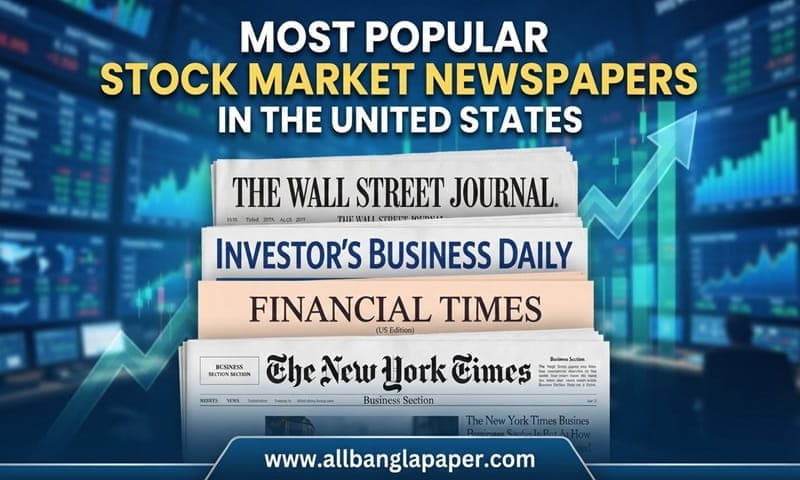
In an age of real-time stock tickers, trading apps, and social media "finfluencers," it might seem like traditional stock market newspapers have lost their relevance. Nothing could be further from the truth. While the delivery format has evolved—shifting largely from print to digital—the core value of dedicated financial journalism has only grown stronger.
Stock market newspapers provide something that a random tweet or a quick Google search cannot: verified, researched, and context-rich financial reporting produced by teams of specialized journalists, analysts, and economists. Whether you are a first-time investor trying to understand what moves the Dow Jones Industrial Average, or a seasoned trader tracking earnings season across the S&P 500, having access to the right stock market newspaper can make the difference between a well-informed decision and a costly guess.
This comprehensive guide covers the top stock market newspapers in the United States, complete with their official URLs, so you can bookmark, subscribe, or simply explore each publication based on your investing style and needs. We'll also break down what makes each newspaper unique, who it's best suited for, and how to build a well-rounded reading habit that keeps you ahead of market trends.
What Exactly Is a "Stock Market Newspaper"?
Before diving into the list, it's worth clarifying what qualifies as a stock market newspaper in the modern sense. Traditionally, this meant a physical, printed daily or weekly publication filled with stock tables, earnings reports, and market commentary. Today, the term has expanded to include:
Legacy print newspapers with strong digital platforms (like The Wall Street Journal)
Digital-first financial news outlets (like MarketWatch and Yahoo Finance)
Business-focused sections of general newspapers (like The New York Times Business section)
Specialty investment newspapers and newsletters (like Investor's Business Daily and Barron's)
Global financial newspapers with heavy U.S. coverage (like the Financial Times)
For the purposes of this guide, we'll cover all of these categories since American investors regularly rely on a mix of print-heritage and digital-native sources.
The Top Stock Market Newspapers in the USA
1. The Wall Street Journal (WSJ)
URL: https://www.wsj.com
The Wall Street Journal is widely regarded as the gold standard of American financial journalism. Owned by Dow Jones & Company (a subsidiary of News Corp), the WSJ has been covering business and markets since 1889. Its "Money & Investing" section is a must-read for anyone serious about the stock market, offering daily market recaps, in-depth earnings analysis, and long-form investigative journalism on corporate America.
Why investors love it:
Comprehensive daily market data and stock tables
Deep dives into monetary policy, the Federal Reserve, and macroeconomic trends
Trusted opinion and editorial pages on business regulation and tax policy
Strong mobile app and digital subscription with personalized watchlists
Best for: Professional investors, financial advisors, and anyone who wants the most authoritative, comprehensive coverage of U.S. and global markets.
2. Barron's
Also part of the Dow Jones & Company family, Barron's is a weekly publication that dives deeper into investment strategy than day-to-day news. It's known for its stock picks, roundtable discussions with top fund managers, and detailed statistical data on market performance.
Why investors love it:
Weekly format allows for deeper analytical pieces rather than breaking news
Strong focus on long-term investment strategy and portfolio construction
Popular "Barron's 400 Index" and stock-picking features
Roundtable interviews with Wall Street's top strategists
Best for: Long-term investors and those who prefer weekly digest-style analysis over daily news consumption.
3. Investor's Business Daily (IBD)
URL: https://www.investors.com
Investor's Business Daily, commonly known as IBD, was founded by William O'Neil and has built its reputation on a data-driven, systematic approach to stock picking. IBD is also now part of the News Corp/Dow Jones family after its 2021 acquisition. It's especially popular among growth investors and those who follow technical analysis.
Why investors love it:
Proprietary rating systems (like the IBD Composite Rating and Relative Strength Rating)
CAN SLIM investment methodology, developed by founder William O'Neil
IBD 50 and IBD Leaderboard lists of top-performing growth stocks
Detailed charts combining fundamental and technical data
Best for: Growth investors, swing traders, and those who use quantitative screening methods to find stocks.
4. The Financial Times (FT)
URL: https://www.ft.com
While headquartered in London, the Financial Times is essential reading for American investors due to its extensive coverage of U.S. markets within a global context. The FT is prized for its international perspective, helping U.S.-based investors understand how European and Asian markets, currency fluctuations, and geopolitical events affect their portfolios.
Why investors love it:
Global economic coverage that contextualizes U.S. market movements
Renowned "Lex" column offering sharp, concise investment analysis
Strong coverage of central banking policy worldwide
FT's annual rankings and specialized reports (e.g., FT 500)
Best for: Investors with international exposure or those who want a non-U.S.-centric view of global markets.
5. The New York Times – Business Section
URL: https://www.nytimes.com/section/business
The New York Times isn't a dedicated financial newspaper, but its Business section is a powerhouse of market-relevant journalism. It excels at connecting stock market movements to broader social, political, and economic narratives—something narrower financial outlets sometimes miss.
Why investors love it:
Strong investigative and enterprise journalism on corporate practices
Excellent coverage of technology, labor markets, and regulatory issues affecting stocks
The DealBook newsletter and section, focused on mergers, acquisitions, and Wall Street deals
Accessible writing style for less experienced investors
Best for: General readers who want market news presented alongside broader context, and those interested in corporate accountability journalism.
6. MarketWatch
URL: https://www.marketwatch.com
Owned by Dow Jones & Company, MarketWatch is a digital-first financial news outlet that provides real-time stock quotes, market commentary, and personal finance advice. It strikes a balance between professional-grade data and accessible writing for retail investors.
Why investors love it:
Free access to a large portion of content (unlike WSJ's paywall)
Real-time market data and after-hours trading updates
Retirement and personal finance columns alongside market news
Easy-to-navigate stock screener and portfolio tools
Best for: Retail investors who want free, real-time market updates without a heavy paywall.
7. Bloomberg
URL: https://www.bloomberg.com
Bloomberg is synonymous with speed and depth in financial reporting. While best known for its Bloomberg Terminal used by institutional traders, Bloomberg.com and Bloomberg Businessweek provide extensive coverage accessible to everyday investors.
Why investors love it:
Unmatched breaking news speed on market-moving events
Global network of correspondents covering every major financial center
In-depth data visualizations and interactive charts
Bloomberg Businessweek offers longer-form analysis and profiles
Best for: Investors and professionals who need the fastest possible access to breaking financial news and global market data.
8. Forbes
Forbes covers business, investing, and wealth management with a slightly different angle—focusing heavily on entrepreneurship, billionaire wealth tracking, and company leadership alongside traditional market news.
Why investors love it:
Strong personal finance and investing advice columns
Forbes' well-known wealth and company rankings (Forbes 400, Global 2000)
Contributor network of independent financial experts and advisors
Accessible content for both new and experienced investors
Best for: Readers interested in the intersection of entrepreneurship, leadership, and stock market investing.
9. CNBC
URL: https://www.cnbc.com
CNBC is technically a broadcast network, but its website functions as one of the most visited financial news sources in the U.S. It offers live market coverage, breaking news alerts, and commentary from well-known TV personalities like Jim Cramer.
Why investors love it:
Real-time market data and live video coverage
"Mad Money" and other popular programs translated into digital content
Strong coverage of pre-market and after-hours trading
Free access to most articles and market data
Best for: Investors who like a mix of written news and video-based market commentary.
10. Business Insider
URL: https://www.businessinsider.com
Business Insider covers markets, tech, and finance with a modern, digitally native approach. It's known for accessible explainer-style journalism that appeals to younger and newer investors.
Why investors love it:
Easy-to-digest explainer articles on complex financial topics
Strong startup and tech-sector coverage relevant to growth investors
Frequent market recap and "what happened today" style content
Mobile-friendly format designed for on-the-go reading
Best for: Millennial and Gen Z investors who want digestible, jargon-light market coverage.
11. USA Today – Money Section
URL: https://www.usatoday.com/money
USA Today's Money section provides accessible market news for a general audience. It's less technical than the WSJ or Barron's but does a solid job covering major market-moving events and personal finance topics.
Why investors love it:
Beginner-friendly explanations of market events
Strong personal finance and retirement planning content
Free access with minimal paywall restrictions
National reach, making it a good "everyday" source
Best for: Casual investors and readers who want straightforward market updates without heavy financial jargon.
12. Kiplinger
URL: https://www.kiplinger.com
Kiplinger has long been a trusted name in personal finance and investment guidance. While it publishes less breaking news than the WSJ or Bloomberg, its long-form investment strategy pieces and retirement planning content are extremely valuable.
Why investors love it:
Strong focus on retirement, tax planning, and long-term wealth building
Stock market outlook reports and sector-specific investment guides
Practical, actionable advice for individual investors
Trusted for decades among conservative, buy-and-hold investors
Best for: Retirement-focused investors and those building long-term, diversified portfolios.
13. Reuters
Reuters is a global news wire service with an outstanding business and markets desk. It's often the original source behind breaking financial news that gets picked up by other outlets.
Why investors love it:
Extremely fast, wire-service-level breaking news
Global coverage spanning every major stock exchange
Neutral, fact-based reporting style
Free access to most market news content
Best for: Investors who want unbiased, fast-breaking news without commentary or opinion.
14. Yahoo Finance
URL: https://finance.yahoo.com
While not a traditional "newspaper," Yahoo Finance has become one of the most widely used financial news aggregators and data platforms in the U.S., combining original reporting with syndicated content from other outlets.
Why investors love it:
Free real-time stock quotes and comprehensive charting tools
Aggregates news from multiple sources in one place
Strong portfolio tracking and watchlist features
Popular video content and market commentary
Best for: Investors who want an all-in-one platform combining news, data, and portfolio tracking.
15. The Motley Fool
URL: https://www.fool.com
The Motley Fool blends financial journalism with investment advisory services. It's known for its long-term, buy-and-hold investment philosophy and stock recommendation newsletters.
Why investors love it:
Long-term investment philosophy focused on compounding returns
Popular premium stock-picking newsletters (Stock Advisor, Rule Breakers)
Beginner-friendly educational content on investing basics
Active community and discussion boards
Best for: Long-term, buy-and-hold investors who appreciate a conversational, educational tone.
16. Seeking Alpha
Seeking Alpha operates as a crowdsourced investment research platform where independent analysts and contributors publish stock analysis, earnings breakdowns, and investment theses.
Why investors love it:
Crowdsourced analysis offering diverse investment perspectives
Detailed earnings call transcripts and analysis
Stock-specific research from independent contributors
Popular "Alpha Picks" and quant ratings for individual stocks
Best for: Investors who want granular, stock-specific research beyond mainstream news coverage.
17. Value Line
URL: https://www.valueline.com
Value Line has been a trusted source of independent investment research since 1931. Its famous one-page stock reports are used by financial advisors and individual investors alike to quickly assess a company's fundamentals.
Why investors love it:
Independent, unbiased research (Value Line doesn't accept payment from companies it covers)
Iconic one-page company reports with historical data
Proprietary Timeliness and Safety rankings for stocks
Trusted by generations of fundamental investors
Best for: Fundamental analysts and investors who want independent, conflict-free research.
18. The Economist – Business & Finance Section
URL: https://www.economist.com/finance-and-economics
Though based in the UK, The Economist has a massive American readership and provides essential macroeconomic context that affects U.S. stock markets. Its finance and economics section covers global monetary policy, trade, and market trends with a sharp analytical edge.
Why investors love it:
Sharp, analytical writing on macroeconomic trends
Strong coverage of central bank policy and global trade
Weekly format ideal for busy investors
Global perspective that complements U.S.-centric outlets
Best for: Investors who want to understand the macroeconomic forces shaping stock market performance.
How to Choose the Right Stock Market Newspaper for You
With so many options, choosing the right stock market newspaper (or combination of publications) depends on a few key factors:
1. Your Investment Style
Day traders and swing traders benefit most from real-time sources like Bloomberg, CNBC, and MarketWatch.
Growth investors should prioritize Investor's Business Daily for its data-driven ratings and CAN SLIM methodology.
Long-term, buy-and-hold investors will find more value in Barron's, Kiplinger, and The Motley Fool.
Fundamental analysts should look at Value Line and Seeking Alpha for detailed company research.
2. Budget and Subscription Costs
Many of these publications operate on a freemium model, offering limited free articles before requiring a paid subscription. If budget is a concern, start with free sources like MarketWatch, Yahoo Finance, Reuters, and CNBC before investing in a premium subscription to the WSJ or Barron's.
3. Depth vs. Speed
If you want fast, digestible headlines, sources like Business Insider, USA Today, and CNBC are ideal. If you want deep, analytical journalism that takes time to digest, the WSJ, Financial Times, and The Economist are better suited to your needs.
4. Global vs. Domestic Focus
U.S.-focused investors who rarely trade international stocks may not need the Financial Times or The Economist. However, if your portfolio includes international ETFs, ADRs, or emerging market exposure, these global publications become essential.
Building a Well-Rounded Financial News Diet
Rather than relying on a single source, most successful investors read across multiple publications to get a balanced view of the market. A sample daily/weekly reading routine might look like this:
Daily: MarketWatch or CNBC for real-time updates, plus the Wall Street Journal for in-depth analysis
Weekly: Barron's for strategic insights and The Economist for macroeconomic context
As needed: Seeking Alpha or Value Line when researching specific stock positions
Monthly: Kiplinger for retirement and long-term planning content
This layered approach ensures you're getting both the immediate "what's happening now" coverage and the deeper "why it matters" analysis that shapes smarter investment decisions.
The Shift from Print to Digital: What It Means for Investors
It's worth noting that nearly every major stock market newspaper on this list has transitioned primarily to digital distribution. Print circulation for financial newspapers has declined steadily over the past two decades, but this shift has actually benefited investors in several ways:
Real-time updates replace the need to wait for the next day's print edition
Interactive charts and data tools are far more powerful than static printed tables
Mobile apps allow investors to track markets and read news on the go
Personalization features let readers customize watchlists and news feeds based on their portfolio
That said, some investors still value the print experience for its focused, distraction-free reading format—free from the constant notifications and clickbait headlines common in the online world. The Wall Street Journal, Barron's, and the Financial Times still maintain print editions for this reason.
Frequently Asked Questions About Stock Market Newspapers
Is the Wall Street Journal worth subscribing to?
For serious investors, yes. The WSJ offers unmatched depth in market analysis, breaking news, and long-form investigative journalism that's difficult to find elsewhere at the same quality level.
What is the best free stock market newspaper?
MarketWatch, Yahoo Finance, and Reuters all offer substantial free content, making them excellent starting points for investors who don't want to pay for a subscription immediately.
Which newspaper is best for beginner investors?
USA Today's Money section and Business Insider are known for accessible, jargon-light explanations that are ideal for those just starting to learn about the stock market.
Do I need multiple subscriptions to stay informed?
Not necessarily. Many investors successfully combine one paid subscription (like the WSJ or Barron's) with several free sources (like MarketWatch, CNBC, and Yahoo Finance) to stay well-informed without overspending.
How often should I read stock market news?
This depends on your investment style. Active traders may check news multiple times a day, while long-term investors might only need to review market news weekly or monthly.
The landscape of stock market newspapers in the United States is rich and varied, offering something for every type of investor—from the data-obsessed growth trader poring over Investor's Business Daily's proprietary ratings, to the long-term retirement planner reading Kiplinger's latest guidance, to the globally-minded investor tracking currency movements in the Financial Times.
The key isn't finding the single "best" stock market newspaper—it's building a personalized mix of sources that matches your investment goals, risk tolerance, and how much time you're willing to dedicate to staying informed. Bookmark a few of the publications above, experiment with their free content, and over time you'll develop a reading routine that keeps you sharp, informed, and ready to make confident investment decisions in any market environment.